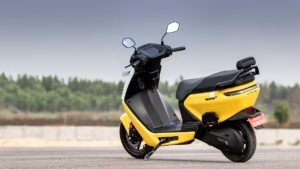
Electric vehicles (EVs) have become the new face of smart mobility in India and globally. They promise cleaner emissions, lower fuel expenses, and high-tech features. But beyond the purchase price and green appeal, a more important question emerges: do electric vehicles actually long -term save money in the long run?
The short answer is yes — but understanding why involves looking deeper into long-term savings, ownership costs, and certain hidden expenses. In this blog, we’ll explore the real cost of owning an electric vehicle over time, and why despite some high-ticket components, EVs still offer significant cost advantages.
Why EV Battery Replacement is Expensive After a Few Years
One of the most talked-about concerns with electric vehicles is long-term battery replacement. EV batteries, particularly lithium-ion ones, are expensive to manufacture and install. In India, replacing a battery can cost anywhere between ₹60,000 to ₹1.5 lakh, depending on the vehicle model and capacity.
Why this happens:
- Over time, EV batteries degrade naturally, especially with frequent charging and high-temperature usage.
- Most batteries last around 6 to 8 years, or up to 1,00,000 kilometers.
- If you’re a long-term EV user, you’ll likely face the cost of battery replacement once during ownership.
But here’s the positive side:
- Battery warranties (usually 3 to 8 years) cover early degradation.
- Battery prices are dropping each year as technology improves.
- You still save more on fuel and maintenance over time than this one-time cost.
Hidden long term savings Costs in Electric Two-Wheelers
Many believe electric scooters are “maintenance-free,” but that’s only partially true. While EVs don’t require engine oil changes, clutch repairs, or gear servicing, there are still components that wear out.
Hidden maintenance costs may include:
- Tyre replacements – due to heavier battery load and instant torque
- Brake pad wear – especially in performance EVs
- Suspension – stress from weight distribution over time
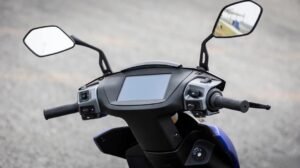
- Software issues – occasional updates or malfunctions needing service center visits
Although these aren’t frequent, they can add up over the years. The good news? Most electric scooters still require less frequent and less expensive servicing than petrol bikes.
Long-Term Ownership Cost of Electric Scooters in India
Cost Component | Petrol Scooter | Electric Scooter (e.g., Ather 450X) |
Fuel (average use) | ₹50,000–₹60,000 | ₹5,000–₹6,000 (electricity) |
Servicing & Maintenance | ₹10,000–₹15,000 | ₹3,000–₹6,000 |
Insurance & Tax | ₹6,000–₹8,000 | ₹6,000–₹8,000 |
Total Over 5 Years | ₹70,000–₹85,000 | ₹14,000–₹20,000 |

Lets compare the long-term cost of owning an EV vs a petrol scooter in India over 5 years:Conclusion
Is Charging Infrastructure Costly for Electric Vehicles?
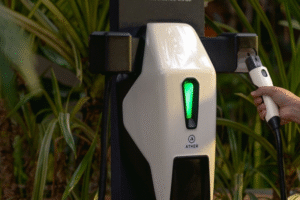
One concern EV buyers have is where and how to charge — and whether it’s expensive to install or use charging stations.
Here’s the breakdown:
1. Home charging setup:
- Cost: ₹10,000 to ₹25,000 (one-time)
- Most brands offer free or subsidized installation with the scooter purchase.
2. Public fast chargers:
- Cost per session: ₹15–₹25 per 15 minutes
- Ather Grid and other networks offer first few months free for new users.
3. Commercial or third-party charging:
- Costs may vary depending on availability and speed.
Despite these costs, charging is still much cheaper than refueling petrol. For instance, charging a full Ather 450X costs about ₹15–₹18, while the same distance on petrol would cost ₹60–₹80.
Bonus: EVs can also be charged overnight at home, making them more convenient than waiting in fuel queues.
How Much Does It Cost to Maintain an Electric Vehicle Over Time?
Electric vehicles require less servicing due to fewer moving parts. There’s no engine, no spark plugs, and no oil filters — which means fewer things to wear out or go wrong.
Common long-term maintenance includes:
- Brake pad replacement: ₹600–₹1,200 every 10,000 km
- Tyre replacement: ₹3,000–₹4,500 after 15,000–20,000 km
- General servicing: ₹500–₹1,500 once or twice a year
- Software updates: Mostly free, OTA (over-the-air)
Estimated yearly maintenance cost: ₹1,500 to ₹3,000, which is less than half of what a typical petrol scooter user spends.